
You Do Not Need a Visa to Experience Korea
Here is something that surprises many Western travelers: you can visit South Korea for up to 90 days without a visa. Citizens of the United States, United Kingdom, Canada, Australia, most European Union countries, and dozens of other nations can enter Korea with nothing more than a passport and a K-ETA (Korea Electronic Travel Authorization).
This means you can fly to Seoul next month, spend 1-4 weeks experiencing Korean culture, taking short language courses, attending K-pop events, exploring Buddhist temples, and eating your way through the greatest food city in Asia — all without a single visa application.
Whether you are testing the waters before committing to a full study program, taking a gap between semesters, or simply exploring Korea as a travel destination, this guide covers everything you can do during a short-term visa-free stay — and the few things you cannot.
Thinking about a longer stay? A short visit is the perfect trial run. admissions.kr/language-programs can help you plan a transition from visitor to student.
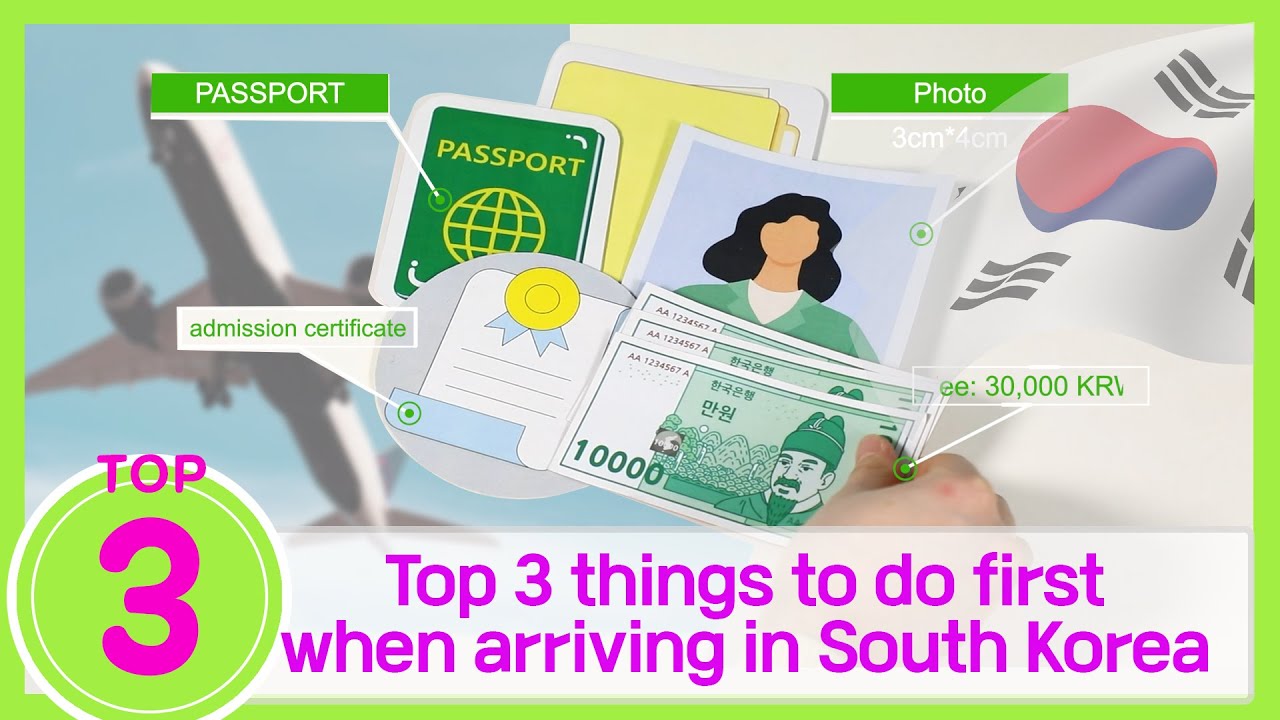 Watch on YouTube: Top 3 things to do first when arriving in South Korea — Korea Higher Education Times
Entry Requirements for Western Visitors
K-ETA (Korea Electronic Travel Authorization)
As of 2026, most visa-free visitors need a K-ETA before boarding their flight to Korea. It is not a visa — it is an electronic pre-screening similar to the US ESTA or Australia's ETA.
How to apply:
- Visit k-eta.go.kr or download the K-ETA app
- Fill in personal details, passport information, and travel plans
- Upload a passport photo
- Pay ₩10,000 (~$7.50)
- Receive approval (usually within 24 hours, sometimes instant)
Validity: 2 years or until your passport expires (whichever comes first). Multiple entries allowed.
Important notes:
- Apply at least 72 hours before your flight (approvals are usually fast, but do not risk it)
- K-ETA exemptions may apply for certain nationalities — check the official website
- Some countries have bilateral agreements that exempt K-ETA entirely
Visa-Free Stay Duration by Nationality
| Country | Visa-Free Duration | K-ETA Required |
|---|---|---|
| United States | 90 days | Yes (check exemptions) |
| United Kingdom | 90 days | Yes (check exemptions) |
| Canada | 90 days | Yes (check exemptions) |
| Australia | 90 days | Yes |
| Germany | 90 days | Yes (check exemptions) |
| France | 90 days | Yes (check exemptions) |
| Netherlands | 90 days | Yes |
| Sweden | 90 days | Yes |
| Italy | 90 days | Yes |
| Spain | 90 days | Yes |
| Japan | 90 days | Check current rules |
| New Zealand | 90 days | Yes |
Check your specific nationality: admissions.kr/visa has a country-by-country guide with the latest entry requirements.
What You Can and Cannot Do Visa-Free
You CAN:
- Take short Korean language courses (non-degree, non-credit)
- Attend cultural workshops and programs
- Visit universities and attend information sessions
- Tourist activities (sightseeing, shopping, dining)
- Attend concerts, festivals, and cultural events
- Volunteer (short-term, informal)
- Attend business meetings and conferences
You CANNOT:
- Work for pay (even part-time)
- Enroll in credit-bearing academic programs
- Enroll in a formal language institute program longer than your visa-free stay
- Start a business or conduct commercial activities
If you want to study formally (language institute or university), you will need a D-4 or D-2 visa. But for short courses, workshops, and cultural programs, visa-free entry is sufficient.
What to Do in 1 Week
A single week in Korea is enough to fall in love with the country. Here is how to maximize it:
Seoul Essentials (Days 1-5)
Day 1: Arrival + Orientation
- Arrive at Incheon International Airport
- Take the AREX (Airport Express) to Seoul Station (43 minutes, ₩9,500) or directly to Hongdae/Myeongdong
- Check into accommodation
- Evening walk through Myeongdong (shopping, street food) or Hongdae (nightlife, buskers)
Day 2: Historic Seoul
- Morning: Gyeongbokgung Palace (wear hanbok for free entry)
- Walk through Bukchon Hanok Village
- Lunch: Insadong traditional Korean food
- Afternoon: Changdeokgung Palace + Secret Garden tour
- Evening: Gwangjang Market food tour (bindaetteok, yukhoe, mayak-gimbap)
Day 3: Modern Seoul
- Morning: Gangnam district — COEX Mall, Starfield Library
- Afternoon: Itaewon — diverse international neighborhood, War Memorial of Korea
- Evening: Namsan Tower at sunset (cable car or hike up)
Day 4: Cultural Immersion
- Morning: Korean cooking class (2-3 hours)
- Afternoon: K-pop dance class in Hongdae (1.5 hours)
- Evening: Live K-pop music show recording or Nanta performance
Day 5: Local Life
- Morning: Explore Ikseon-dong (trendy traditional hanok neighborhood with cafes)
- Afternoon: Seongsu-dong (Seoul's Brooklyn — converted factories, specialty coffee)
- Evening: Korean BBQ dinner in Mapo-gu + makgeolli (rice wine) bars
Day Trip Options (Days 6-7)
Option A: DMZ Tour (Full Day) Visit the most heavily fortified border in the world. JSA tours require advance booking but are worth every won. See the section in our temple stay and culture guide for details.
Option B: Nami Island + Gangchon Rail Bike (Full Day) The famous tree-lined island from "Winter Sonata" plus a scenic rail bike ride through the countryside. Perfect for photography.
Option C: Suwon Hwaseong Fortress (Half Day) UNESCO World Heritage site 30 minutes south of Seoul by subway. Walk the fortress walls, try Suwon galbi (short ribs), and see the traditional archery experience.

What to Do in 2 Weeks
Two weeks lets you go deeper into Seoul and explore beyond the capital.
Week 1: Seoul (as above)
Week 2: Beyond Seoul
Days 8-9: Busan (2 nights) Take the KTX from Seoul to Busan (2.5 hours, ~₩60,000). Korea's second city offers:
- Haeundae Beach
- Gamcheon Culture Village (Korea's most colorful neighborhood)
- Jagalchi Fish Market (the freshest sashimi you will ever eat)
- Haedong Yonggungsa Temple (temple on the ocean cliff)
- Gukje International Market
- BIFF Square (Busan International Film Festival area)
Day 10: Gyeongju (Day trip from Busan) Korea's ancient capital (the "museum without walls"). Tumuli Park (royal burial mounds), Bulguksa Temple (UNESCO), Seokguram Grotto, and Gyeongju National Museum. All accessible by bus from Busan (1 hour).
Days 11-12: Jeonju (1-2 nights) Korea's food capital. The Hanok Village is larger and less crowded than Seoul's Bukchon. Must-do: bibimbap at a traditional restaurant, hanji paper-making workshop, makgeolli town tour.
Day 13: Return to Seoul + Shopping Final shopping at Dongdaemun (open until 5 AM), Myeongdong, or Hongdae. Pick up souvenirs, K-beauty products, and snacks.
Day 14: Departure Head to Incheon Airport. AREX runs from 5:20 AM.
What to Do in 3-4 Weeks
Three to four weeks turns a visit into a mini-immersion. You have time for structured programs alongside exploration.
Suggested Structure
Week 1: Seoul exploration (as above) Week 2: Short Korean language course (5 days, 3 hours/day) Week 3: Cultural deep-dive (temple stay + regional travel) Week 4: Advanced activities + farewell
Short Korean Language Courses (No Visa Required)
Several institutions offer 1-4 week intensive Korean courses that do not require a student visa:
Lexis Korea (Gangnam) Private language school (not university-affiliated) offering flexible 1-4 week Korean courses. Small class sizes (4-8 students), multiple start dates per month.
- Duration: 1-4 weeks
- Hours: 15-25 hours per week
- Cost: ₩600,000-900,000 per week
- Best for: Flexible scheduling, premium experience
Rolling Korea (Hongdae) Budget-friendly Korean language school popular with working holiday makers and short-term visitors. Group classes and private tutoring available.
- Duration: 1 week+
- Hours: 10-20 hours per week
- Cost: ₩300,000-500,000 per week
- Best for: Budget-conscious learners
University Summer/Winter Intensive Programs Several universities (Yonsei, SNU, Sogang) offer 3-week summer or winter intensive programs designed for short-term visitors. These are not the regular 10-week terms and do not require a D-4 visa.
- Duration: 3 weeks
- Hours: 4 hours/day, Monday-Friday
- Cost: ₩800,000-1,200,000
- Best for: Students wanting a university experience without visa paperwork
Week-by-Week Itinerary (4 Weeks)
Week 1: Seoul Foundation
- Tourist highlights (palaces, markets, neighborhoods)
- Get a Korean phone SIM (₩30,000-50,000 for 30 days unlimited data)
- Open T-money card for transport (₩2,500 card + charge as needed)
- Explore potential neighborhoods if considering longer study
Week 2: Language Intensive
- 3-4 hours of Korean class daily
- Homework and language exchange in the afternoon
- Practice new Korean in real situations every evening
- By the end of the week: basic self-introduction, ordering, asking directions
Week 3: Cultural Immersion + Regional Travel
- Temple stay (1 night/2 days): ₩50,000-100,000
- Busan trip (2 nights): KTX + accommodation ~₩200,000
- Jeonju day trip: KTX + food ~₩100,000
- Cultural workshops (cooking, pottery, K-pop dance)
Week 4: Integration + Farewell
- Continue language practice
- Visit universities if considering formal study
- Final shopping and souvenir hunting
- Farewell dinner with new friends
- Airport departure
Budget Guide for Short-Term Visitors
Accommodation Options
| Type | Nightly Cost | Best For | Where to Book |
|---|---|---|---|
| Hostel dorm | ₩15,000-25,000 | Solo budget travelers | Booking.com, Hostelworld |
| Guesthouse | ₩30,000-50,000 | Social atmosphere | Airbnb, Booking.com |
| Airbnb studio | ₩40,000-80,000 | Privacy, cooking | Airbnb |
| Budget hotel | ₩50,000-80,000 | Convenience, comfort | Booking.com, Agoda |
| Hanok stay | ₩60,000-120,000 | Cultural experience | Airbnb, Booking.com |
| Mid-range hotel | ₩80,000-150,000 | Standard comfort | All platforms |
Pro tip: For stays of 2+ weeks, negotiate weekly rates at guesthouses or book Airbnb monthly discounts (often 30-50% off nightly rates).
Daily Budget Estimates
| Budget Level | Daily Cost | Includes |
|---|---|---|
| Backpacker | ₩50,000-70,000 | Hostel, street food, subway, free attractions |
| Comfortable | ₩100,000-150,000 | Guesthouse/Airbnb, restaurants, some paid attractions |
| Mid-range | ₩150,000-250,000 | Hotel, good restaurants, taxis, multiple attractions |
| Premium | ₩250,000+ | Nice hotel, fine dining, private tours |
Total Trip Cost Estimates
| Duration | Backpacker | Comfortable | Mid-Range |
|---|---|---|---|
| 1 week | $400-550 | $750-1,100 | $1,100-1,800 |
| 2 weeks | $750-1,000 | $1,400-2,100 | $2,100-3,500 |
| 3 weeks | $1,050-1,450 | $2,100-3,200 | $3,200-5,300 |
| 4 weeks | $1,400-1,900 | $2,800-4,200 | $4,200-7,000 |
Excludes airfare. Round-trip flights: North America ~$800-1,500, Europe ~$600-1,200, Australia ~$500-900.
Practical Essentials
Getting Around
T-Money Card: The essential transit card. Buy at any convenience store (₩2,500 for the card). Works on all buses, subways, and even taxis and convenience stores. Charge at convenience stores or subway machines.
Seoul Subway: Clean, safe, cheap, English-signage everywhere. Covers the entire metropolitan area. Basic fare: ₩1,400.
KTX (High-Speed Train): Korea's bullet train connects Seoul to Busan (2.5 hours), Gwangju (2 hours), Daejeon (1 hour), and other cities. Book at letskorail.com or buy at the station.
Buses: Extensive intercity bus network. Often cheaper than KTX. Book at kobus.co.kr.
Taxis: Cheap by Western standards. Basic fare: ₩4,800. Use the Kakao T app to hail taxis (works like Uber, but Uber is less common in Korea outside Seoul).
Connectivity
Phone SIM: Buy a prepaid SIM at the airport or any convenience store. KT, SK Telecom, and LG U+ all offer tourist SIMs.
- 30-day unlimited data: ₩30,000-55,000
- You can also rent a pocket Wi-Fi at the airport: ₩3,000-5,000/day
Essential Apps:
- Kakao Map: Navigation (more accurate for Korea than Google Maps)
- Naver Map: Alternative navigation (locals prefer this)
- Kakao T: Taxi hailing
- Papago: Translation (better for Korean than Google Translate)
- T-money: Check transit card balance and route planning
- Coupang: Delivery (Korea's Amazon — next-day delivery on everything)
- Baemin / Yogiyo: Food delivery (in Korean, but very visual menus)
Money
Currency: Korean Won (₩). As of March 2026, roughly ₩1,310 = $1 USD.
Cash vs Card: Korea is one of the most cashless societies on Earth. Credit and debit cards (Visa, Mastercard) are accepted virtually everywhere, including small street food stalls and market vendors. However, carry some cash (₩50,000-100,000) for:
- Traditional markets
- Small neighborhood restaurants
- Temple visits and cultural sites
- Vending machines
ATMs: Available at every convenience store. 7-Eleven and CU ATMs accept international cards. Withdrawal fees vary (~₩3,000-5,000).
Safety
Korea is one of the safest countries in the world for travelers. Seoul consistently ranks in the top 5 safest major cities globally. You can walk alone at night, take public transport at any hour, and leave belongings unattended without significant risk.
That said, standard travel precautions apply:
- Keep your passport secure
- Be aware of petty theft in crowded tourist areas (rare but possible)
- Watch for taxi scams at the airport (use the official taxi queue or Kakao T)
- Drink responsibly (Korean drinking culture is intense, and bars rarely have last call)
Weather and Packing
| Season | Temperature | What to Pack |
|---|---|---|
| Spring (Mar-May) | 5-20°C | Layers, light jacket, umbrella |
| Summer (Jun-Aug) | 25-35°C | Light clothes, rain gear (monsoon season late June-July) |
| Autumn (Sep-Nov) | 10-25°C | Layers, light jacket |
| Winter (Dec-Feb) | -10 to 5°C | Heavy winter coat, thermals, warm layers |
Korea has distinct seasons. Summer is hot and humid; winter is cold and dry. Spring and autumn are ideal for short-term visits — comfortable temperatures and beautiful scenery (cherry blossoms in April, foliage in October-November).
Tourist Student Programs
Several organizations offer structured short-term programs that combine tourism with educational content:
Korea Tourism Organization (KTO) Programs
The KTO runs several free or subsidized programs for international visitors:
- Free Walking Tours: English-guided tours of Seoul neighborhoods (Insadong, Bukchon, Gwanghwamun)
- K-Culture Experiences: Free cultural workshops at the KTO Tourist Information Center
- Korea Grand Sale: Annual shopping festival (January-February) with discounts and events for foreign visitors
Seoul Metropolitan Government Programs
- Seoul Global Cultural Center: Free cultural classes for international visitors (cooking, K-pop dance, calligraphy, language basics)
- Discover Seoul Pass: All-in-one tourist pass covering major attractions, transportation, and experiences. 24-hour (₩39,900), 48-hour (₩55,000), 72-hour (₩69,900)
University Open Programs
Many Korean universities host "Open Campus" events during summer and winter where international visitors can attend sample lectures, campus tours, and information sessions. These are excellent for students considering formal enrollment.
Check admissions.kr/universities for upcoming open campus dates at specific universities.
From Short Visit to Long-Term Study
If your short-term visit convinces you that Korea is where you want to study, here is the transition path:
- During your visit: Attend university information sessions, visit language institutes, talk to current students
- Before you leave: Collect application materials, take campus tours, identify your top program choices
- Back home: Apply to your chosen program, secure acceptance
- Visa application: Apply for D-4 (language) or D-2 (degree) visa at your local Korean embassy
- Return to Korea: This time with a student visa and a plan
Many students describe this two-step approach — visit first, then enroll — as the most effective way to choose the right program. Online research can only tell you so much. Walking through a campus, sitting in a neighborhood cafe, riding the subway at rush hour — these experiences inform your decision in ways that websites cannot.
Need personalized advice? Chat with Dr. Admissions → for program comparison, visa guidance, and personalized recommendations based on your interests and budget.
This guide is part of the admissions.kr Western Student Resource Series. For more guides on studying in Korea, visit our blog.
Our AI advisor can help you with any questions about universities, visas, scholarships, and more.
Chat with AI Advisor

