
The Housing Problem No One Warns You About
You've been accepted to a Korean university. Your visa is approved. Your flight is booked. And then reality hits: where exactly are you going to live?
Korean housing is nothing like what you're used to in the West. There's no Craigslist apartment section that makes sense. The deposit system is unlike anything you've encountered. Real estate agents speak Korean. Contracts are in Korean. And some of the cheapest options — goshiwon, one-rooms, officetels — are terms you've never heard before.
This guide walks you through every housing option available to exchange and international students in Korea, with honest comparisons of cost, quality, convenience, and the gotchas that nobody talks about.
Not sure which university to attend? Some schools have better dormitory availability than others. Check our university rankings — we rate housing and campus quality.
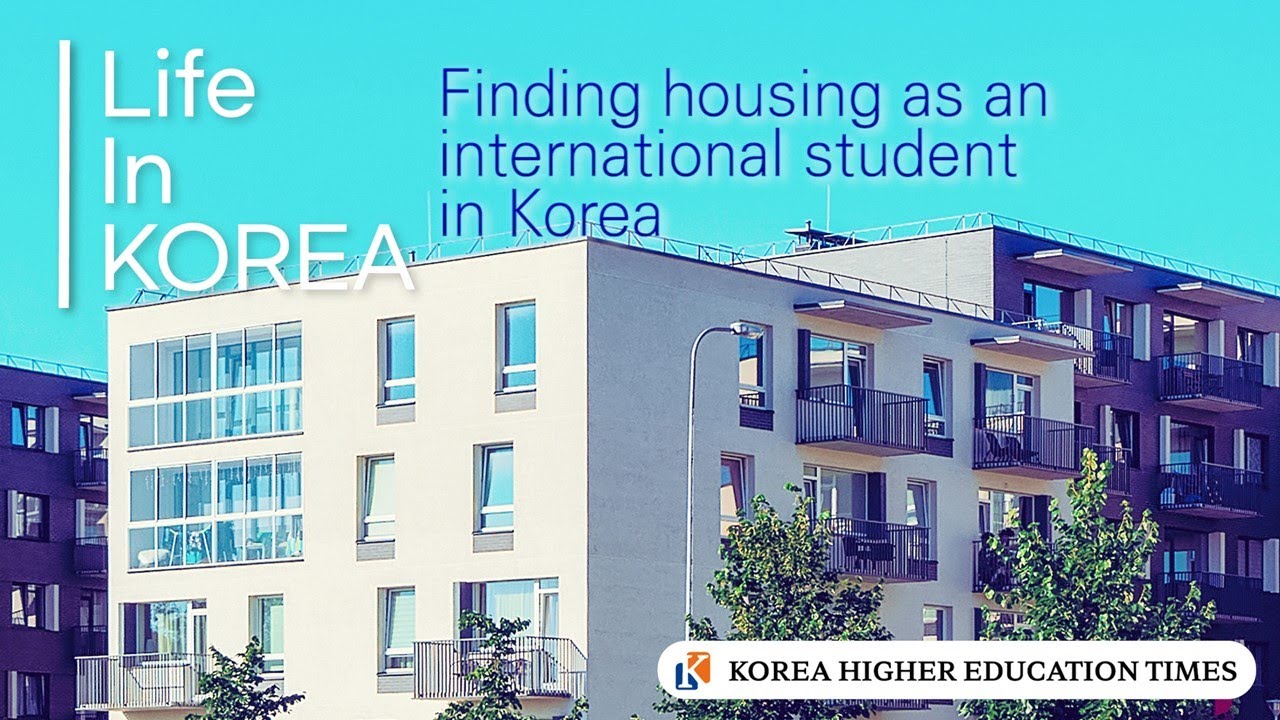 Watch on YouTube: Life in Korea — Finding housing — Korea Higher Education Times
Option 1: University Dormitory (기숙사)
What It Is
Korean university dormitories are purpose-built student housing on or near campus. They typically feature double rooms (shared with one roommate), communal bathrooms, study rooms, shared kitchens, laundry facilities, and sometimes cafeterias.
Cost
| City | Monthly Cost (₩) | Monthly Cost ($) |
|---|---|---|
| Seoul | ₩300,000–₩550,000 | $222–$407 |
| Busan | ₩200,000–₩400,000 | $148–$296 |
| Daejeon | ₩200,000–₩350,000 | $148–$259 |
| Smaller cities | ₩150,000–₩300,000 | $111–$222 |
What's included: Utilities (electricity, water, heating), internet, building maintenance, security, furniture (bed, desk, wardrobe, shelf)
Pros
- Cheapest option — significantly cheaper than renting independently
- Zero hassle — no deposit negotiations, no real estate agents, no contracts in Korean
- Social — you're surrounded by other students, both Korean and international
- Safe — controlled access, CCTV, staff presence
- Convenient — on campus or short walk to classes
- International student priority — many universities reserve dorm spots for exchange students
- Meal plans available — some dorms include or offer cafeteria access at ₩3,000–₩5,000/meal
Cons
- Small rooms — typically 8–12 sqm for two people
- Shared living — you'll share a room (and possibly bathroom) with a roommate
- Rules — curfews at some dormitories (10 PM–11 PM), guest restrictions, no cooking in rooms
- Limited availability — especially at popular Seoul universities; apply early
- Semester-based — you may need to reapply each semester; summer housing often limited
- No privacy — if you value alone time, dorm life can be exhausting
- Noise — thin walls, communal spaces = noise
How to Apply
- During your university application: Most universities ask about dormitory preference on the admission form
- Separate dormitory application: Some universities require a separate application after acceptance
- Deadline: Typically 1–2 months before semester starts
- Priority: Exchange students and students from distant countries usually get priority
- Payment: Semester-based prepayment (4–5 months upfront)
Tips
- Apply the moment you receive your acceptance letter — spots fill quickly
- Request a single room if available (₩100,000–₩200,000 more per month, worth it for introverts)
- Ask if your dormitory has a kitchen — many don't, which means relying on cafeterias and delivery
- International student dormitories tend to be newer and better-maintained than general ones
- Check scholarship options — some scholarships include dormitory housing, and search Korean universities to compare campus housing availability
Option 2: Goshiwon (고시원)
What It Is
Goshiwon are micro-rooms originally designed for Korean students studying for civil service exams (고시). They're tiny — we're talking 3–6 square meters — but come fully furnished with a bed, desk, shelf, and sometimes a mini bathroom. Think Japanese capsule hotel, but as your apartment.
Cost
| City | Monthly Cost (₩) | Monthly Cost ($) |
|---|---|---|
| Seoul (central) | ₩350,000–₩600,000 | $259–$444 |
| Seoul (outskirts) | ₩280,000–₩450,000 | $207–$333 |
| Busan/Other cities | ₩200,000–₩400,000 | $148–$296 |
What's included: Utilities, internet, rice, kimchi (many goshiwon provide basic food), shared kitchen, laundry room
Pros
- No deposit — or very small deposit (₩100,000–₩500,000)
- Flexible contracts — monthly, no long-term commitment
- All-inclusive — utilities, internet, basic food included
- Easy to find — located near every major subway station and university area
- Move-in ready — fully furnished, just bring your suitcase
- Good locations — often in the heart of busy neighborhoods
Cons
- Tiny — the smallest living space you've likely ever occupied
- Thin walls — you'll hear your neighbors cough, talk, and snore
- Shared facilities — kitchen, bathroom (unless room has its own), laundry
- No guests — most goshiwon prohibit visitors in rooms
- Depressing for long stays — fine for 1–3 months, claustrophobic for longer
- Variable quality — some are clean and modern; others are genuinely grim
- Limited storage — forget about unpacking everything
How to Find
- Walk around your target neighborhood — goshiwon signs (고시원/고시텔) are everywhere near universities and subway stations
- 네이버 부동산 (Naver Real Estate): Search "고시원" + neighborhood name
- 직방 (Zigbang): App with goshiwon listings
- Facebook groups: "Seoul Housing for Foreigners," "Korean Goshiwon & Sharehouses"
Tips
- Visit in person before signing — photos can be misleading; check cleanliness, smell, and noise level
- Choose one with a private bathroom — worth the extra ₩50,000–₩100,000/month
- Check window situation — some rooms have no windows (seriously)
- Negotiate — longer stays often get discounts; ask for ₩20,000–₩50,000 off per month
- Best goshiwon chains: GOSTAY, Livingtel, goshiwon.com — search these for higher-quality options
Option 3: Sharehouse (셰어하우스)
What It Is
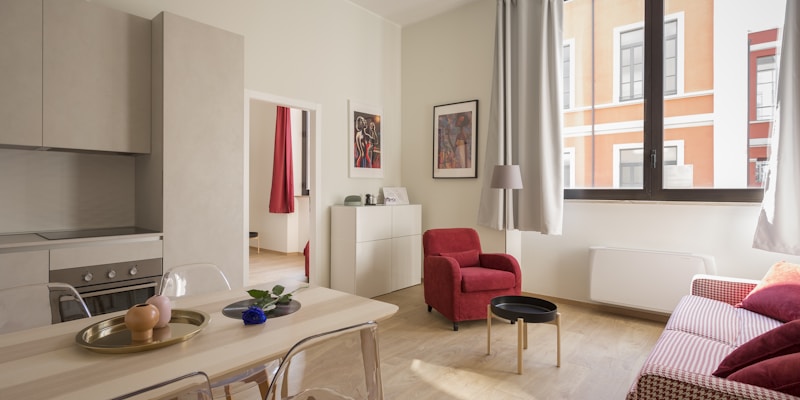
Sharehouses are shared apartments with private bedrooms and communal living spaces (kitchen, living room, bathroom). They're run by companies that handle maintenance, cleaning, and community events. Think WeWork but for living.
Cost
| City | Monthly Cost (₩) | Monthly Cost ($) |
|---|---|---|
| Seoul (central) | ₩450,000–₩750,000 | $333–$555 |
| Seoul (outskirts) | ₩350,000–₩550,000 | $259–$407 |
| Busan/Other cities | ₩300,000–₩500,000 | $222–$370 |
What's included: Utilities, internet, furniture, shared living spaces, cleaning (common areas), community events
Pros
- Social — best option for making friends, both Korean and international
- Moderate deposit — typically ₩500,000–₩1,000,000 (refundable)
- Clean and maintained — companies handle cleaning and repairs
- Furnished — private room comes with bed, desk, wardrobe
- English-friendly — many sharehouse companies have English websites and staff
- Flexible leases — minimum 1–3 months
- Community events — movie nights, cooking classes, language exchange
Cons
- Shared bathroom/kitchen — unless you pay premium for an en-suite room
- House rules — quiet hours, guest policies, cleaning schedules
- Variable housemates — you can't choose who you live with
- More expensive than goshiwon — for a shared living situation
- Less privacy than one-room — communal spaces mean communal interactions
Major Sharehouse Companies in Korea
| Company | Price Range | English Support | Special Features |
|---|---|---|---|
| Woozoo (우주) | ₩400K–₩700K | Yes | Largest network, design-focused |
| Borderless House | ₩450K–₩750K | Yes | 50/50 Korean-international mix |
| D-Well | ₩350K–₩600K | Partial | Budget-friendly options |
| COZIP | ₩400K–₩650K | Yes | Newer, modern interiors |
| NOFFICE | ₩500K–₩800K | Yes | Premium, coworking included |
Tips
- Borderless House is the standout for exchange students — they deliberately house Koreans and internationals together for language exchange
- Book 1–2 months before arrival; popular locations sell out
- Ask about the current housemate makeup — if it's all one nationality, the social dynamic changes
- Visit in person if possible; if not, ask for a video tour
Option 4: One-Room / Officetel (원룸/오피스텔)
What It Is
A one-room (원룸) is a Korean studio apartment — one room with a bathroom and kitchenette. An officetel (오피스텔) is similar but in a commercial-residential building with better amenities (lobby, security, elevator, package lockers).
Cost
| Type | Seoul Monthly | Deposit | Outside Seoul Monthly |
|---|---|---|---|
| One-room | ₩450,000–₩800,000 | ₩5M–₩10M | ₩250,000–₩500,000 |
| Officetel | ₩600,000–₩1,200,000 | ₩5M–₩15M | ₩400,000–₩700,000 |
The Korean Deposit System (보증금)
This is the biggest culture shock for Western students. Korean rentals require a large upfront deposit:
월세 (Wolse) — Monthly Rent:
- Deposit: ₩5,000,000–₩10,000,000 ($3,700–$7,400)
- Monthly rent: ₩400,000–₩800,000
- The higher the deposit, the lower the monthly rent
전세 (Jeonse) — Key Money:
- Deposit: ₩50,000,000–₩200,000,000+ ($37,000–$148,000+)
- Monthly rent: ₩0 or very low
- Your deposit is "loaned" to the landlord; returned when you leave
- Not practical for exchange students
For exchange students: 월세 (monthly rent) is the only realistic option. Some landlords will negotiate lower deposits for foreigners, especially with a guarantor letter from your university.
Pros
- Complete privacy — your own space, your rules
- Independence — cook what you want, come and go freely
- More space — 15–30 sqm (vs. 5 sqm for goshiwon)
- Long-term comfort — ideal for stays of 6+ months
- Real Korean living experience — you live like a local
Cons
- Expensive deposit — ₩5M–₩10M is a lot of cash upfront
- Contract in Korean — you'll need help reading and negotiating
- Real estate agent fees — typically 0.5 month's rent
- Furnished vs. unfurnished — many one-rooms are unfurnished; you'll need to buy basics
- Utilities extra — ₩80,000–₩150,000/month for gas, electric, water, internet
- Lonelier — no built-in social community
- Landlord interactions — all in Korean unless you're lucky
How to Find
- 직방 (Zigbang) — Korea's Zillow/Rightmove; filter by 원룸 or 오피스텔
- 다방 (Dabang) — Similar to Zigbang
- 네이버 부동산 (Naver Real Estate) — Comprehensive listings
- Real estate agents (부동산) — Walk into any 부동산 office near your target area; they handle everything
- Facebook groups — "Seoul Apartments for Foreigners" has listings from landlords who speak English
Tips
- Never sign a contract you can't read — bring a Korean friend or use your university's support service
- Check the real estate agent is licensed — they should display their license in the office
- Take timestamped photos of everything at move-in — to get your deposit back
- Negotiate the deposit — tell landlords you're a short-term exchange student; some will accept ₩2M–₩3M
- Ask about university guarantor programs — some universities help students with deposit guarantees
Option 5: Airbnb / Short-Term Rental
What It Is
Airbnb and similar platforms (Booking.com, Agoda) offer furnished apartments for short-term stays. Useful for the first 1–2 weeks while you find permanent housing, or for exchange students on very short programs (1–3 months).
Cost
| Type | Nightly | Monthly (30-day discount) |
|---|---|---|
| Private room (shared apartment) | ₩30,000–₩60,000 | ₩600,000–₩1,200,000 |
| Entire studio | ₩50,000–₩100,000 | ₩1,000,000–₩2,000,000 |
| Entire 1-bedroom | ₩70,000–₩150,000 | ₩1,400,000–₩3,000,000 |
Pros
- Instant booking — no deposit negotiations, no Korean contracts
- Furnished — everything you need from day one
- Flexible — cancel or extend easily
- English interface — book and communicate entirely in English
- No ARC required — unlike most Korean rental contracts
- Reviews — you can read what other guests experienced
Cons
- Expensive for long stays — 2–3x the cost of permanent housing
- No resident registration — you can't register your address, which causes issues with bank accounts and phone contracts
- Not designed for students — no desk, no community, often tourist-oriented locations
- Legally gray — short-term rentals face increasing regulation in Korea
- No utility bills — sounds good, but you need utility registration for some services
When to Use Airbnb
- First 1–2 weeks: Book an Airbnb before arrival as a landing pad while you apartment hunt
- Short programs: If your exchange is 4–8 weeks, Airbnb may be simpler than signing a lease
- Between housing: If your dormitory doesn't cover semester breaks
Tips
- Book monthly stays for 20–40% discounts vs. nightly rates
- Look for listings in student-heavy neighborhoods (Sinchon, Hongdae, near your university)
- Message hosts to negotiate rates for stays of 2+ months
- Keep receipts — some university exchange programs reimburse housing costs
Option 6: Homestay (홈스테이)
What It Is
Living with a Korean family in their home. You get a private room and may receive meals. This is the most immersive cultural experience but also the least common option.
Cost
₩500,000–₩900,000/month ($370–$666), often including meals.
Pros
- Maximum cultural immersion — Korean language practice daily
- Meals included — home-cooked Korean food
- Safe and supported — a family looking out for you
- Korean language improvement — immersion is the fastest way to learn
Cons
- Less independence — family rules about noise, guests, curfew
- Rare — organized homestay programs are limited in Korea
- Cultural friction — living with a family from another culture can be stressful
- Location dependent — the family's home may not be near your university
How to Find
- University international offices sometimes arrange homestays
- Korea Homestay Foundation — limited but organized program
- AIESEC Global Volunteer program sometimes includes homestay
- Ask your university's Korean language institute — they may have homestay partnerships
The Comparison Table
| Factor | Dormitory | Goshiwon | Sharehouse | One-Room | Airbnb | Homestay |
|---|---|---|---|---|---|---|
| Monthly cost | ₩200K–₩550K | ₩280K–₩600K | ₩350K–₩750K | ₩450K–₩800K+ | ₩600K–₩2M+ | ₩500K–₩900K |
| Deposit | None/small | None–₩500K | ₩500K–₩1M | ₩5M–₩10M | None | None–₩500K |
| Privacy | Low | Medium | Medium | High | High | Low–Medium |
| Social life | High | Low | High | Low | Low | Medium |
| Flexibility | Semester-based | Monthly | 1–3 month min | 6+ months | Nightly | Monthly |
| Furnished | Yes | Yes | Yes | Often no | Yes | Yes |
| English support | Yes | Rarely | Yes | Rarely | Yes | Varies |
| Best for | First-timers, budget | Solo budget travelers | Social students | Long-term, independent | Short stays, transition | Cultural immersion |
| Move-in speed | Arranged pre-arrival | Same day | 1–2 weeks | 2–4 weeks | Instant | Arranged pre-arrival |
Before You Arrive: What to Book and When
2–3 Months Before Arrival
- Apply for university dormitory (this should be your first action after acceptance)
- Research neighborhoods near your university — Naver Maps street view is your friend
- Book an Airbnb for first 3–5 nights as a safety net
- Join Facebook housing groups — start monitoring listings
1 Month Before Arrival
- Confirm dormitory placement — if you didn't get a spot, shift to Plan B (sharehouse or goshiwon)
- Contact sharehouse companies if dorm isn't available — Woozoo, Borderless House, etc.
- Prepare housing budget — including deposit money
First Week in Korea
- If dorm: move in, settle, done
- If no dorm: use your Airbnb base to visit goshiwon/sharehouses in person
- Always visit before signing — bring a Korean-speaking friend
- Open a bank account and get a phone (needed for viewing appointments)
Within First Month
- Settle permanent housing
- Register your address at your local district office (구청)
- Set up utilities if renting independently
Housing Scam Warning
Korean housing scams targeting foreigners do exist. Red flags:
- Asking for deposit before viewing — never send money without seeing the place
- Online-only listings with no in-person viewing — insist on visiting
- Prices too good to be true — if it's 50% below market rate, it's a scam
- Pressure to sign immediately — legitimate landlords give you time
- Unlicensed agents — always verify the real estate office is registered
- "Foreigner premium" — some agents inflate prices for foreigners; get a Korean friend to verify
How to Protect Yourself
- Use established platforms (직방, 다방, Naver Real Estate)
- Go through licensed real estate agents (look for the 공인중개사 license)
- Have a Korean speaker review any contract before signing
- Ask your university international office for verified housing recommendations
- Never pay more than one month's deposit for goshiwon or sharehouse
Neighborhood Guide for Student Housing
Seoul
| Area | Near Universities | Vibe | Budget Range |
|---|---|---|---|
| Sinchon/Hongdae | Yonsei, Sogang, Hongik | Young, nightlife, vibrant | ₩400K–₩700K |
| Anam/Seongbuk | Korea Univ, Sungkyunkwan | Student-friendly, quiet | ₩350K–₩600K |
| Gwanak | Seoul National | Affordable, residential | ₩300K–₩500K |
| Wangsimni/Seongsu | Hanyang | Trendy, upcoming | ₩400K–₩650K |
| Itaewon/HBC | Yonsei (nearby) | International, English-friendly | ₩500K–₩900K |
| Noryangjin/Dongjak | Various | Budget, exam-village | ₩280K–₩450K |
Busan
| Area | Near Universities | Budget Range |
|---|---|---|
| Haeundae | Dongseo, Catholic | ₩300K–₩500K |
| Sasang/Geumjeong | Pusan National | ₩250K–₩400K |
Ask Dr. Admissions
Need help finding housing near your target university? Not sure whether to dorm or rent? Dr. Admissions knows the housing situation at every major Korean university and can give you personalized recommendations.
Chat with Dr. Admissions now → — Ask anything about living in Korea as a student.
Housing prices in this guide reflect March 2026 market conditions and may vary. Exchange rate: 1 USD = ₩1,350. Always verify current prices before committing. Last verified: March 2026.
© 2026 Admissions.kr — Your complete guide to studying in South Korea
Our AI advisor can help you with any questions about universities, visas, scholarships, and more.
Chat with AI Advisor

